

Two years ago on a complete whim, I came with 6 baby chicks. To be fair, it wasn’t a complete whim. I pitched the idea to Jordan and he lovingly recommended we wait a year so that I wasn’t pregnant while trying to build a chicken coop. Obviously I did not wait and two days later we were chicken owners.
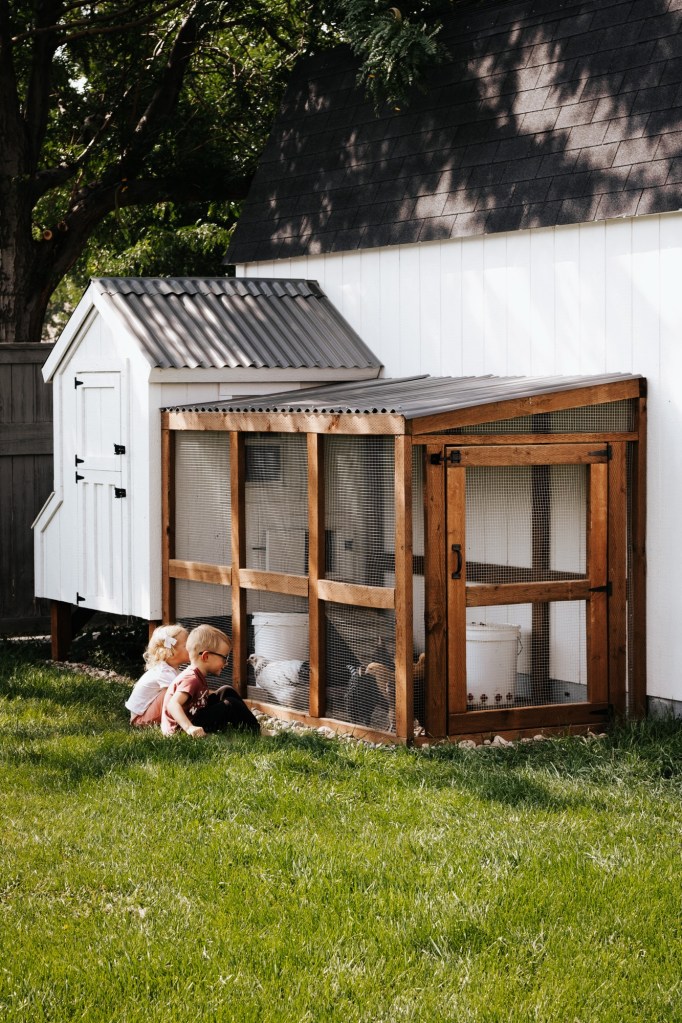
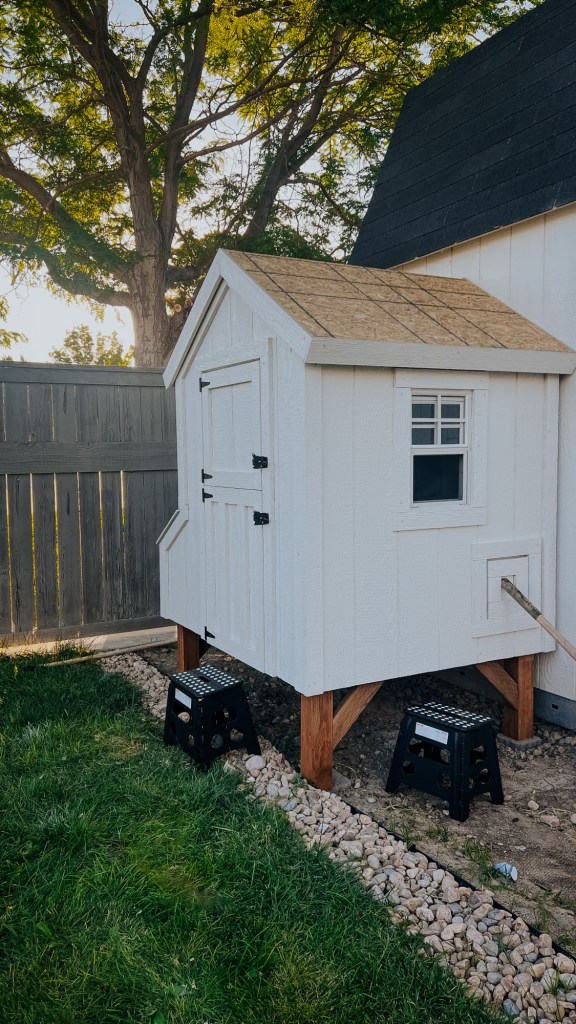
I built them a chicken coop and run (chicken coop details here and run details here) and they’ve been happily chicken-ing for almost two years now.
I am not an expert, but this has been my experience and I hope you find it helpful if you’re considering becoming a chicken mom/dad.
Want to see what projects I’m working on now? Follow me on Instagram.
Benefits of Backyard Chickens
Eggs, of course! This is the most obvious benefit, especially with the current sky-high egg prices. Fresh eggs taste better and are more nutritious than store bought eggs. Anytime we need to supplement with store bought eggs my kids complain about them, which surprised me! I did not expect the difference to be that noticeable.
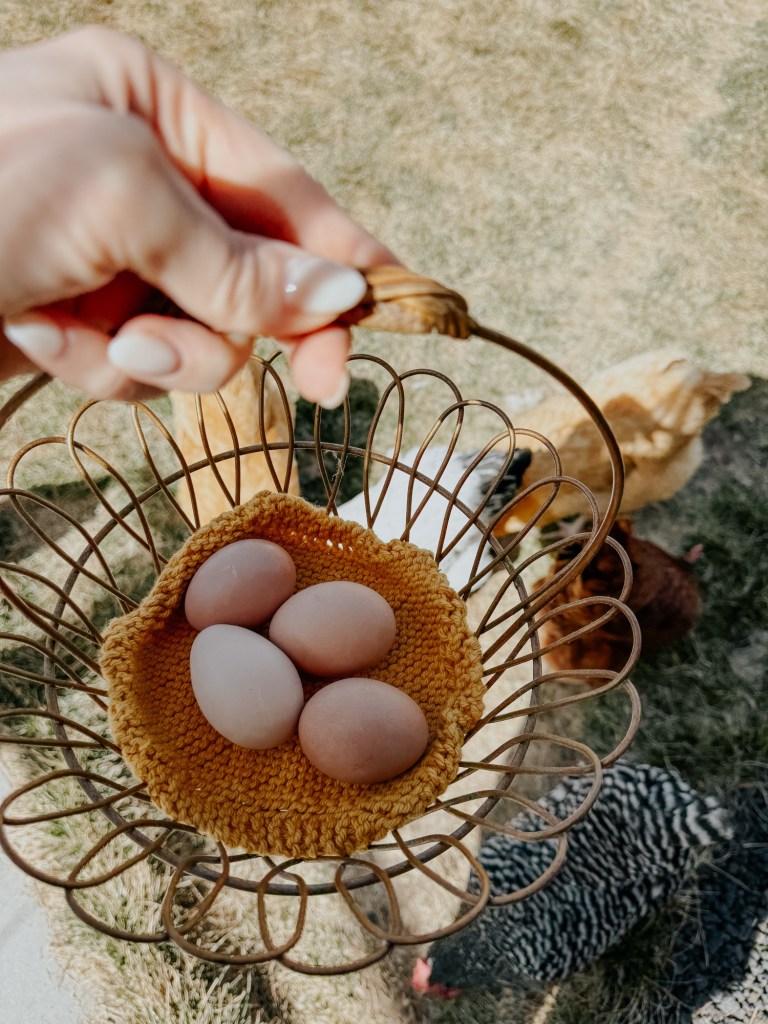
My favorite item in the “pro” column is the enrichment they offer my kids. Taking care of the chickens – which is pretty easy! – has become a great tool to teach them responsibility and how to care for animals. We’ve also had a lot of great educational opportunities like learning about how eggs are formed, chicken anatomy, and where chicken meat comes from (potential eeek on this one, but luckily they handled that little nugget great).

We don’t compost, but if you’re into that I’ve heard great things about using chicken droppings composted into your garden. Maybe I’ll jump in that one day.
Choosing your Chickens
I highly recommend doing your research into breeds! After deciding to get chickens, I researched the entire day to decide what breeds I wanted.
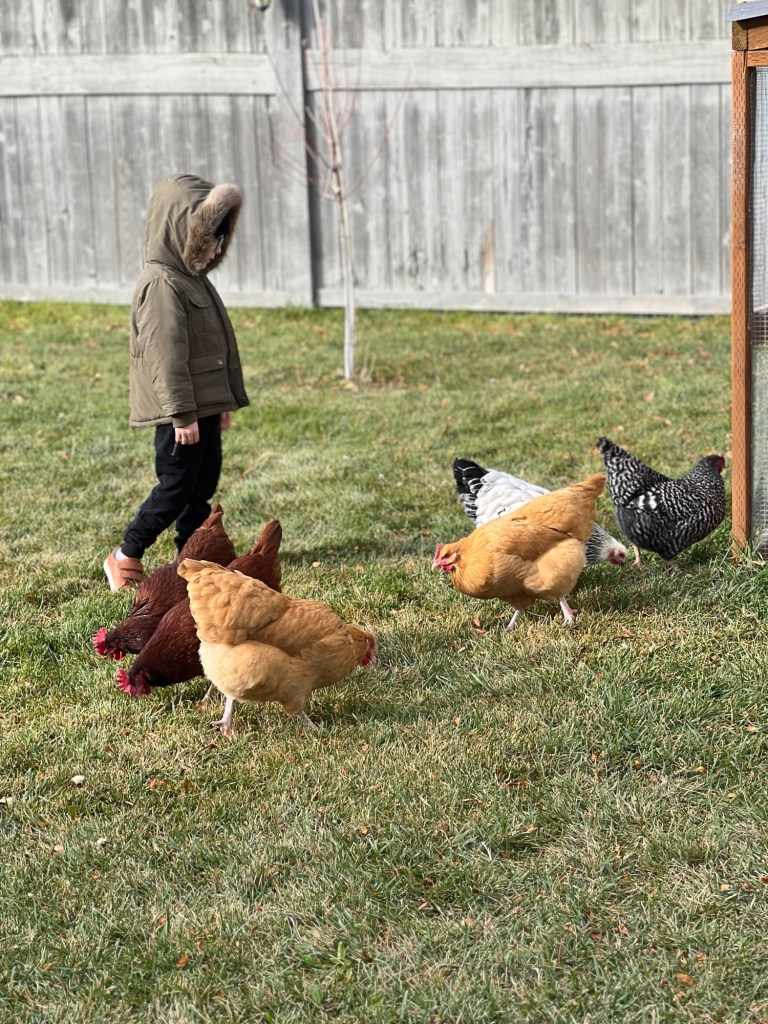
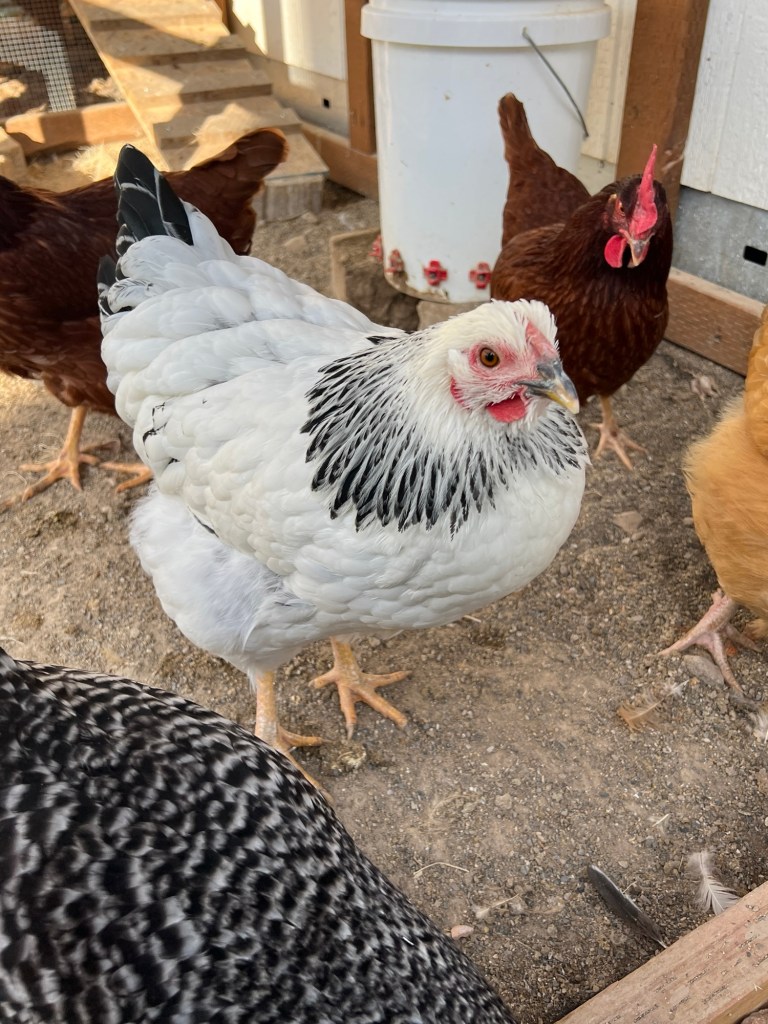
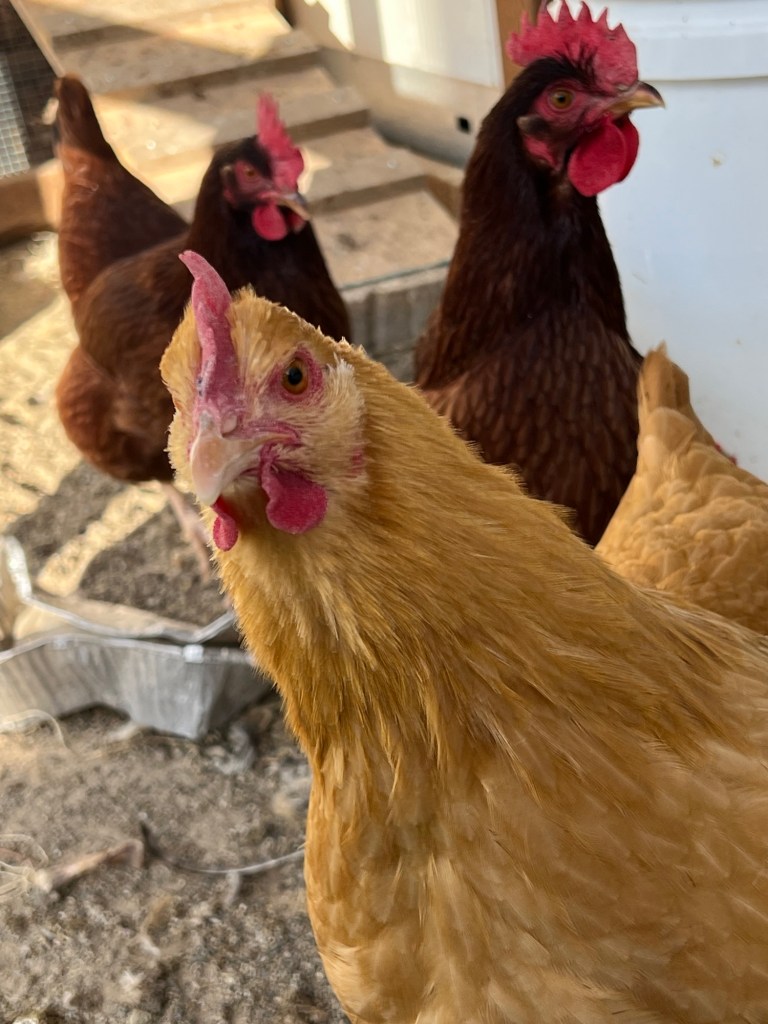
My must have characteristics were friendly, both cold and heat hardy, good egg layers, and not too loud. I decided on two Buff Orpingtons, two Rhode Island Reds, a Plymouth Barred Rock, and a Colombian Wyandotte. I think these are all excellent breeds to start with and I would buy each one again.
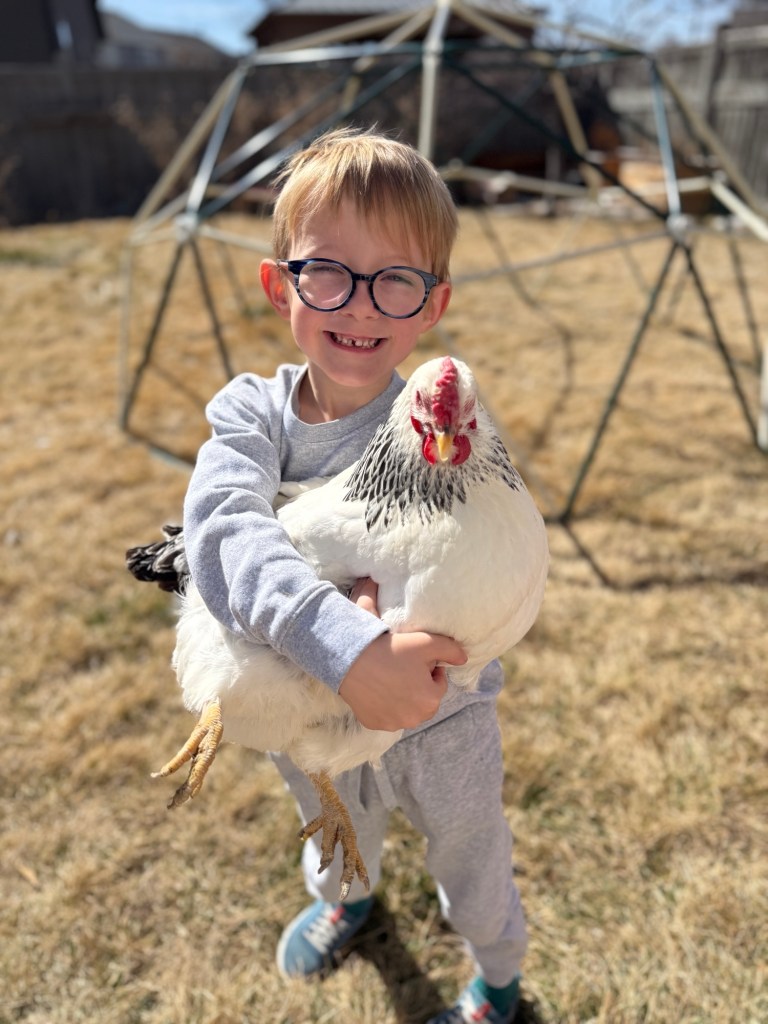
My Colombian Wyandotte is my sweetest chicken! She lets anyone pick her up and is the most docile creature – she’s my favorite. That’s what I expected from my Buff Orpingtons, but one of them has become top hen and become a stubborn little thing, but she’s still really friendly.
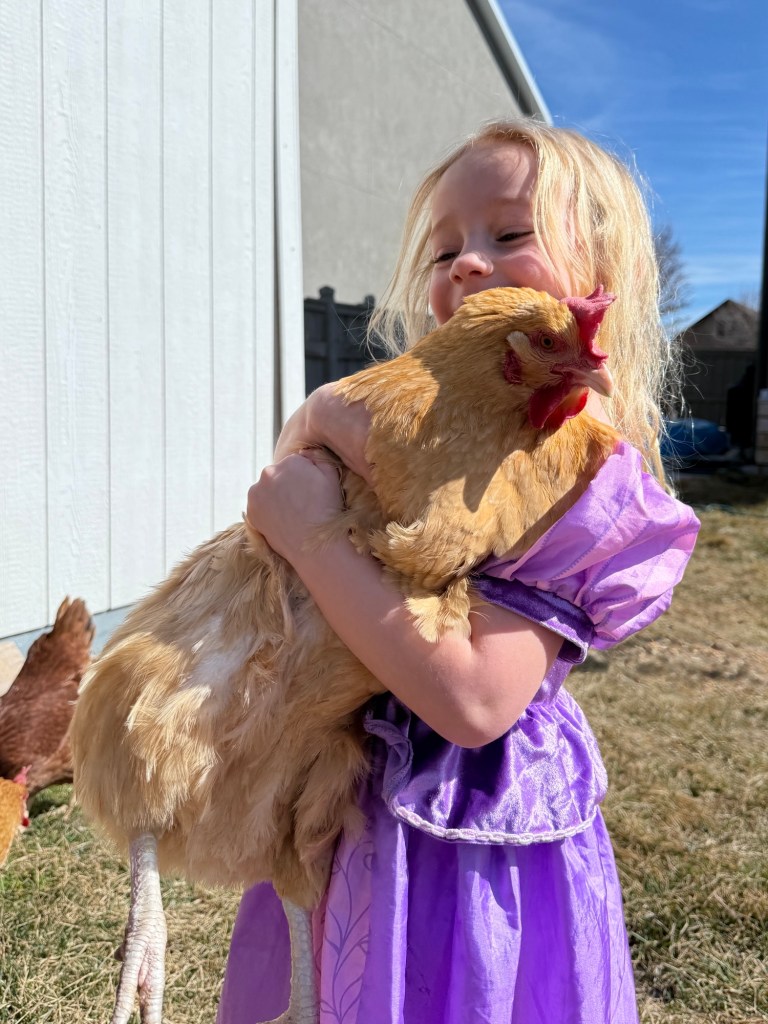
I think the most important consideration needs to be their hardiness. This will help keep your chickens low maintenance and help them live a happy life. It is not recommended to put heat in the coop in the winter, so if you live where it is below freezing for a good chunk of the winter, I wouldn’t consider breeds that cannot handle it. And the reverse is true for very warm climates.
The next most important for me is their friendliness. My kids love playing with the chickens. We practice playing with them nicely and respecting animals, but there is something to be said about temperament. I chose breeds that are known to be friendly and not go broody (sit on eggs protectively for a period of time) so that my kids could be active participants in their lives.

All of these chickens are brown egg layers. This year we’re going to add in a few blue egg layers, and I’m excited for the variety! Egg color doesn’t really matter, but it does make it fun for kids (and grown-ups, let’s be honest), so it might be something worth considering. The colored layers we’re adding this year are a Cream Legbar and an Easter Egger.
Setting up a Coop and Run
Disclosure: Some of the links provided are affiliate links, which simply means I may earn a small commission (at no additional cost to you) if you shop through one of my links.
You can see how I built their coop here and their run here. Be sure to avoid overcrowding by building a run that is big enough for the number of chickens you are planning to have (and maybe a little better because…chicken math).

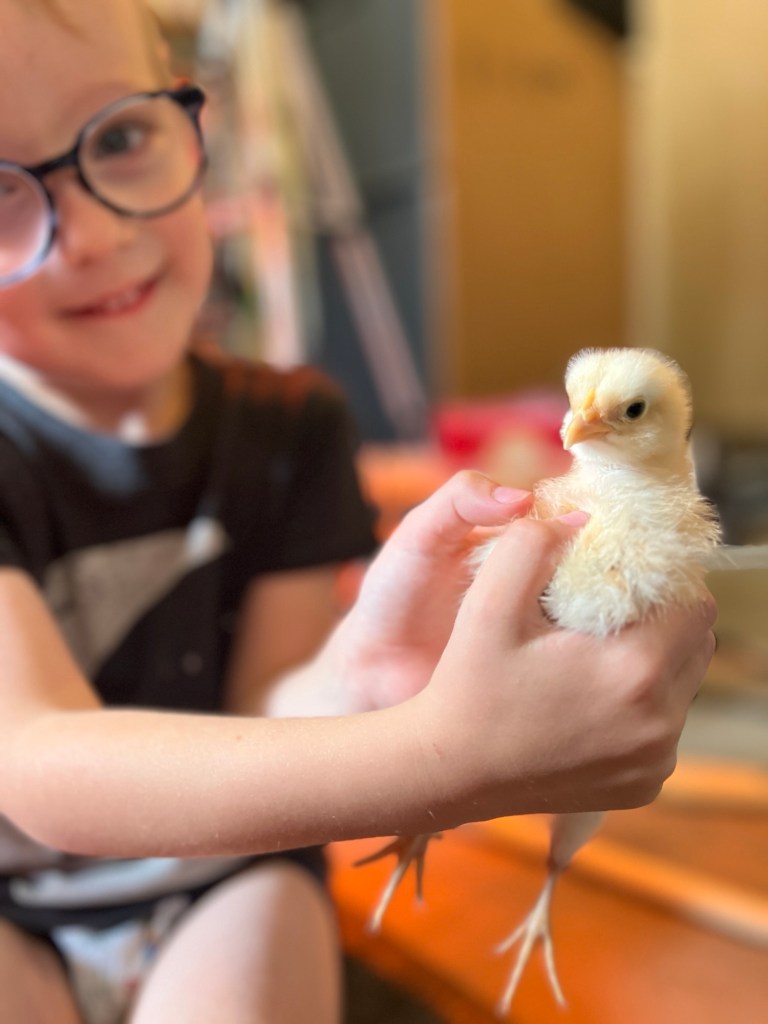
Chickens need to be in a brooder box indoors until they are fully feathered, which is around 4-6 weeks. We converted an old dog kennel, but you can built a box or use a tote… there are tons of ideas on Pinterest! Just make sure it has a way to close off the top because they get big fast and will be trying to escape before you know it. You’ll also need chick starter feed, safe food and water dispensers, pine shavings, and to clean it daily.
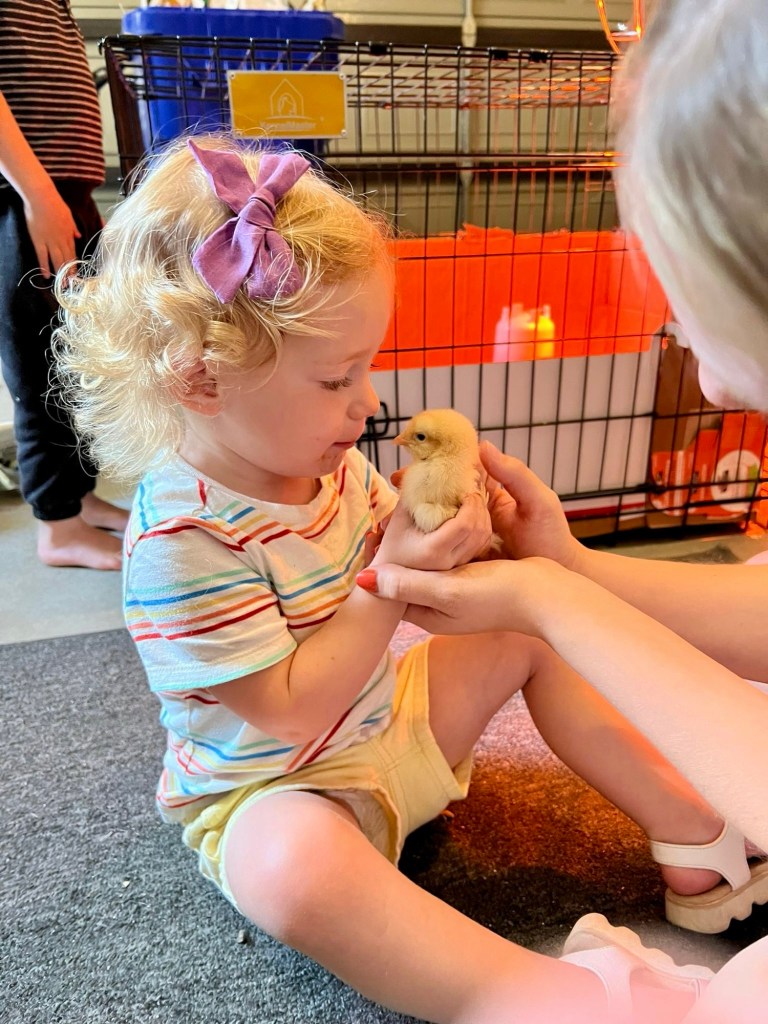
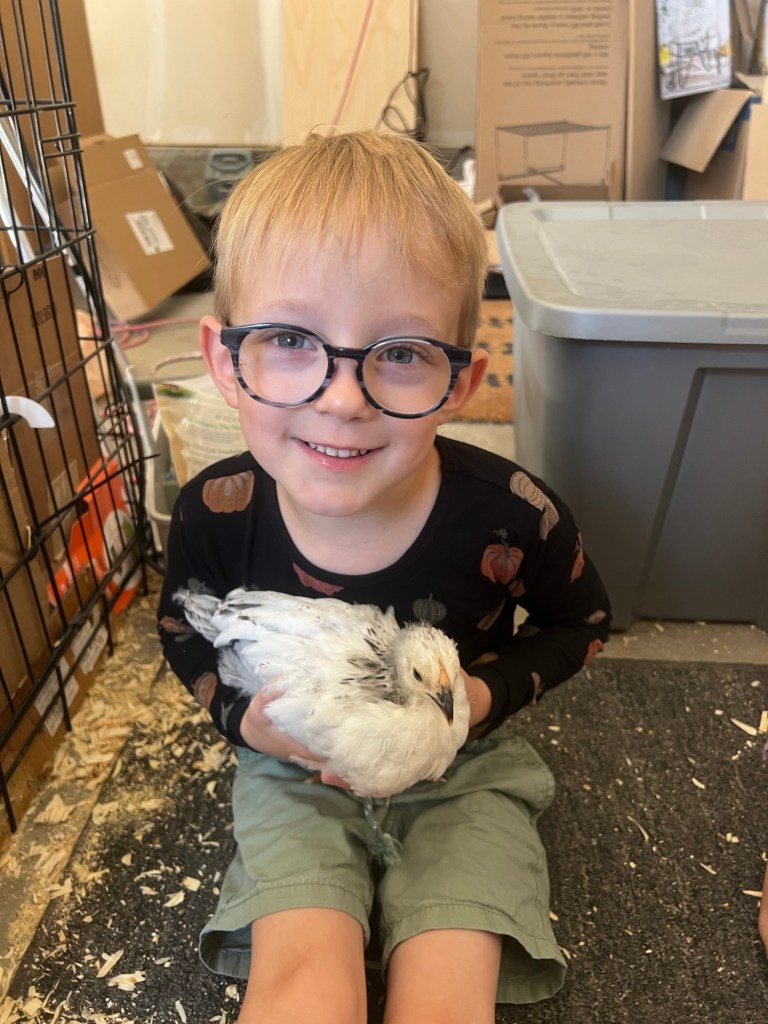
When the chicks are young and in their brooder box is the most care intensive period. After they move to the coop, things get so much easier!

I really like this style feeder and this style waterer. I refill their food every two weeks or so, and their water weekly. I also added some copper piping to the inside of their waterer to cut down on algae growth and it’s worked wonderfully.
We use sand in their run and coop. Do not use play sand! It’s too fine and is dangerous for their lungs. This is the sand I use (I know it is by Quickcrete, but this product does not have concrete in it). It is really easy to scoop their droppings out of the sand in the coop with a long handled litter box scooper.
I also use lime and sweet PDZ (both are inexpensive at tractor supply) to control bugs and keep everything smelling fresh. It’s important to note that the chickens will not have no smell, they are farm animals. But it is super minimal, unless I’ve been slacking on coop cleaning!
I like to use these for their nesting boxes because they’re so easy to change out.
Daily & Seasonal Care
Here is basically what we do to care for them.
Daily :
- Collect eggs
- Feed kitchen scraps/mealworms/chicken scratch as treats
Weekly :
- Scoop out coop
- Sprinkle lime around run and coop
- Sprinkle PDZ around run, coop, nesting boxes
- Check food and water
Monthly :
- Scoop run
- Change nesting pads if needed
Spring/Fall :
- Deep clean coop
- Add sand to coop & run
Downsides to Backyard Chickens
Hopefully now you’re good and excited about getting chickens. There are a few downsides to consider before jumping in.
Cost. There’s a decent chance you’re reading this right now because eggs are ridiculously expensive. It’s important to note that having chickens does not mean free eggs. The start up cost of a coop and a run can be significant. Our set up cost us about $300, and that was two years ago. You can certainly do it for less expensive, but you do want to make sure whatever you do for them is secure against predators. Add in the cost of feed and the eggs still cost money. For us, the many benefits outweigh the cost, and we do save a little bit of money compared to purchasing store bought eggs.
They can be a little noisy. We don’t have any roosters, but they are social girls and will talk to each other loudly sometimes, especially after they lay an egg. It’s actually so cute, it’s like a little “good job!” (look up egg song on YouTube to hear it).
They still need care in the winter. It can be hard to get out there during the winter months to fill their food and water (get a warmer like this one to prevent freezing), and truthfully I’m not as consistent with cleaning out their coop when it’s cold. I also can’t fill their water with a hose and need to carry pitchers out.
They also lay fewer eggs and often stop laying all together in the winter, unless you supplement with additional light, which I choose not to do. So you need to care for them even when they’re not giving you eggs.

Go Get Some Chickens!
Hopefully this was helpful, and I’m always happy to answer any question you have! Like I said I’m no expert, but our backyard chickens have been such a positive experience for our family. I highly recommend them!
With love,
Mercedes 🖤
 With Love, Mercedes
One thought on “Read This Before Getting Chickens : Our Experience with a Backyard Flock”